
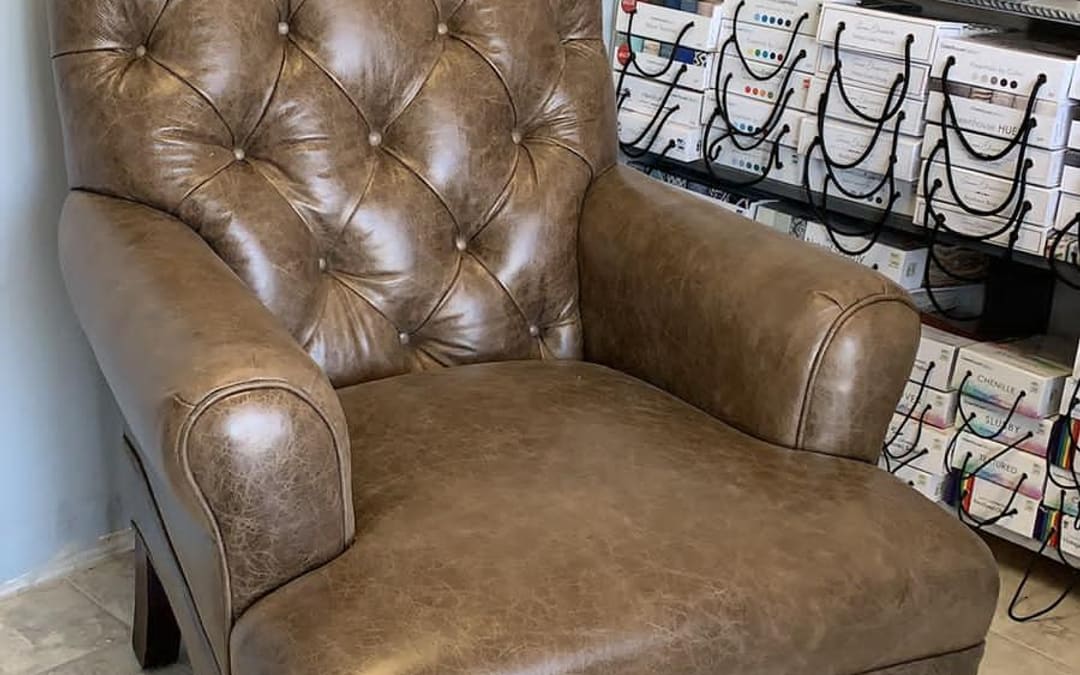
A well-made sofa or chair should serve a family for decades, and the upholstery is the part that decides whether it does. Leather and modern performance fabrics are both forgiving materials, but each has habits that reward a little routine care and punish neglect. Here is the maintenance we recommend to our clients in Orange County, and the signs that it is time to bring a piece to the workroom.
Leather: understand the finish first
Most upholstery leather is either protected (pigmented) or aniline. Protected leather has a thin finish coat that resists stains and is the right choice for family rooms; aniline leather is dyed through with little or no top coat, which gives it a rich, natural look that also absorbs spills quickly. If a drop of water darkens the surface and soaks in, the leather is aniline and needs gentler handling.
Routine care for leather
- Dust weekly with a soft, dry cloth, and vacuum crevices with a brush attachment.
- Wipe spills immediately with a barely damp cloth; never rub or use household cleaners, which strip the finish.
- Condition protected leather two or three times a year with a product made for upholstery; aniline leather should be conditioned only with products meant for unfinished leather.
- Keep leather at least a few feet from heaters and out of direct sun; near a window in Laguna Niguel or Newport Coast, a sheer or UV film prevents fading and drying.
Light scratches on aniline leather often disappear when buffed with a clean cloth. Cracks, worn seat panels and faded arms are signs the hide has dried out and lost its oils; at that point a workroom can re-dye, recondition or replace the worn panels.
Performance fabrics: easier than they look
Performance fabrics, from Crypton and Sunbrella to the many stain-resistant blends used today, are engineered so that liquids bead and dirt stays on the surface. They are the practical choice for homes with children, pets or a view of the beach, but they still need the right routine.
- Vacuum weekly to remove grit, which wears fibers faster than spills do.
- Blot spills with a white cloth and clean with mild soap and water; most performance fabrics also tolerate a diluted bleach solution for stubborn stains, as indicated on the cleaning code.
- Flip and rotate loose cushions monthly so the wear is even.
- Avoid solvents and dry-cleaning fluids unless the fabric's cleaning code (W, S, WS or X) calls for them.
Cushions, frames and the things you cannot clean
Fabric that still looks good can hide foam that has collapsed. If a seat bottoms out, the back pillows no longer hold their shape, or the piece creaks when you sit, the problem is inside. Foam replacement, re-tying springs and tightening frames are routine work in our shop, and they give a quality piece a second life at a fraction of the price of replacing it.
When to reupholster instead of replace
A frame made of hardwood with doweled or screwed joints is worth keeping almost indefinitely. If the piece is comfortable, fits the room and was built well, reupholstering it in a performance fabric or new leather is nearly always the better investment, and it keeps a large object out of the landfill. We can assess the frame at your home and tell you honestly which path makes sense.
Ask the workroom
We offer a free on-site consultation for reupholstery, foam replacement and leather restoration across Orange County, and we are happy to answer care questions about a piece we have made. For anything from a scratch to a full restoration, contact us with a photo and we will advise.