
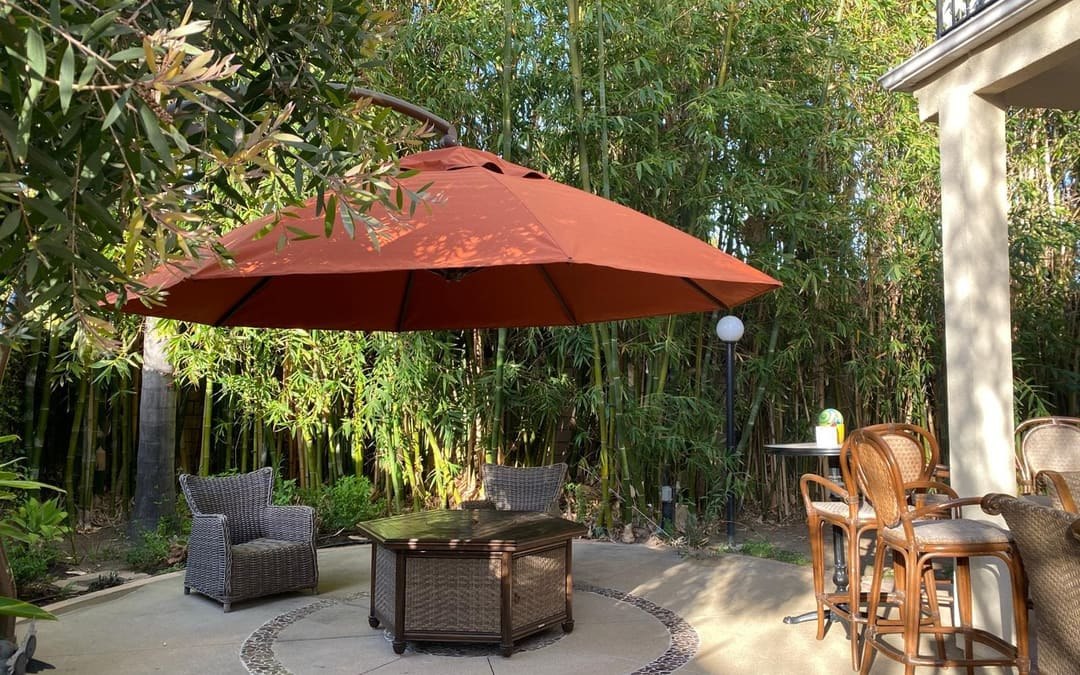
Outdoor furniture in Orange County lives a harder life than it looks. Between the afternoon sun in San Juan Capistrano, the salt air that drifts inland from Dana Point and the morning fog that settles on cushions overnight, a fabric that would last a decade indoors can fade, stiffen or mildew in two summers. Choosing the right textile is the single decision that determines how long a reupholstered patio set will keep its color and comfort.
Why ordinary fabric fails outdoors
Most indoor upholstery fabric is dyed after it is woven, so the color sits on the surface of the fiber. Ultraviolet light breaks that bond, and within a season the top of a cushion is several shades lighter than the underside. Indoor fabric also holds moisture, which is what mildew needs. Outdoor textiles solve both problems at the fiber level.
Solution-dyed acrylic: the standard for a reason
Solution-dyed acrylic, the category Sunbrella is known for, carries its color all the way through each fiber, the way a carrot is orange inside and out. It resists fading for years in direct sun, dries quickly, and can be cleaned with mild soap or even diluted bleach without losing color. It is the fabric we recommend most often for loose cushions, chaise pads and umbrella canopies in coastal cities such as Laguna Beach, Newport Beach and San Clemente.
Modern acrylics no longer feel like canvas. Collections now include soft chenilles, textured bouclés and linen looks that are hard to tell from interior fabric, which is why many of our clients use them on indoor pieces in rooms with full sun or active families.
Performance fabrics for the finest spaces
Perennials and similar high-end lines take the same solution-dyed acrylic fiber and weave it into velvets, sheers and intricate patterns suited to designer projects. They cost more, but for a covered loggia, a yacht club terrace or a pool house that is photographed as often as it is used, the depth of color and hand are worth it. We stock sample books of these collections at our workroom and bring them to the consultation.
Marine vinyl for boats and heavy use
Where cushions are sat on wet or hosed down regularly, marine-grade vinyl is the practical choice. It is engineered against salt, UV and mildew and wipes clean. The newer vinyls have a matte, leather-like texture rather than the shiny look of the past. We use them for boat seating, outdoor kitchen stools and commercial patios.
What is inside matters as much as the cover
Fabric is only half of an outdoor cushion. Standard foam absorbs water like a sponge and takes days to dry; the result is a sour smell and a cushion that sags. We build outdoor cushions with open-cell outdoor foam that drains and dries, wrapped in a breathable fiber layer, and we sew every seam with marine thread that will not rot in the sun. Zippers and welting are chosen for the same conditions.
A quick checklist before you decide
- Exposure: full sun all day calls for solution-dyed acrylic or vinyl; a covered patio opens up more choices.
- Use: poolside and boat seating favor vinyl or quick-dry acrylic; a dining terrace can take textured weaves.
- Color: light and mid tones hide salt residue and dust better than deep navy or black.
- Care: every fabric we recommend can be cleaned with water and mild soap; cushion covers with zippers can be removed and washed.
- Fit: reupholstering keeps the frame you already own, and the new cover is cut to the exact shape of each cushion.
From our workroom to your patio
We reupholster outdoor sofas, chaises, dining chairs and daybeds for homes, restaurants and clubs across Orange County, and we come to you with the sample books. Book a free on-site consultation and we will measure the pieces, show you the options in your own light, and return a detailed estimate. You can also contact us with a photo of the furniture to get started.