
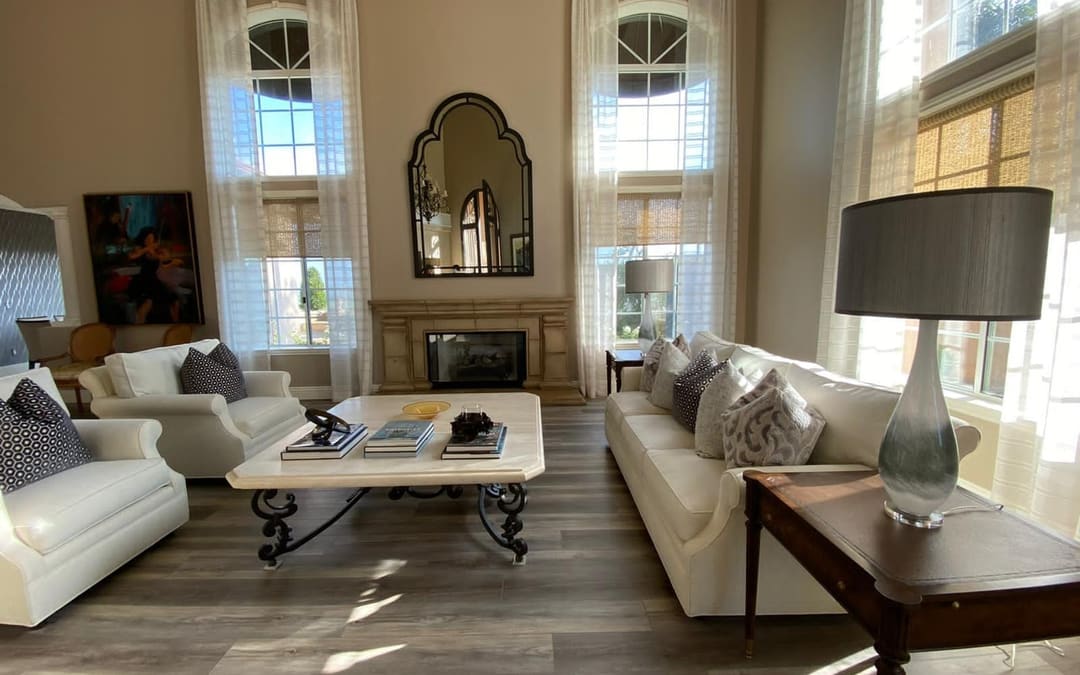
Sooner or later every well-loved piece of furniture asks the same question. The cushions have gone soft, the fabric has faded on the side that faces the window, a seam has opened, or the color simply belongs to another decade. Do you reupholster it, or do you replace it?
The honest answer is: it depends on the piece. Here is how we think about it when a client asks us in their living room.
Start with the frame, not the fabric
Fabric is the part you see, but the frame is the part that decides everything. A sofa or chair built with a kiln-dried hardwood frame, doweled and glued joints, corner blocks and eight-way hand-tied or well-made sinuous springs can be stripped to the wood and built up again as many times as you like. The fabric and the foam are the parts that wear; the frame is the part that lasts.
A quick test: lift one corner of the sofa a few inches. If the opposite corner lifts with it, the frame is stiff and sound. If the piece twists, creaks or flexes, the frame is weak, and new fabric would only dress up a problem.
Pieces worth a close look:
- Anything made before the 1980s. Older furniture was commonly built from solid hardwood with real joinery. Many of these frames are better than what is sold new today.
- Furniture from a quality maker or a custom workroom. If it was expensive when it was new, it was probably built to be recovered.
- Family pieces. A grandmother's wingback or a mid-century chair cannot be bought again. Reupholstery is the only way to keep it.
- Anything you bought because it fits. A sofa that is exactly the right length for the wall, or a chair that suits a corner, is hard to replace with a catalog size.
When replacement makes more sense
Reupholstery is a craft, and it is not the right answer for every piece. We will tell a client to replace when:
- The frame is particleboard, stapled softwood or plastic. Much of the furniture sold in the last twenty years was built for one life. The fabric can be replaced, but the frame will not hold up under the work.
- The piece was never comfortable. New fabric does not change the depth of a seat or the pitch of a back. If you never liked sitting in it, recovering it will not change your mind.
- The style cannot be adjusted. Fabric, trim, cushion fill and skirt can all be changed; the shape of the arms and the scale of the piece cannot. If the shape is the problem, start over.
- Damage goes beyond the upholstery. A broken frame can be repaired, but severe water damage, mold or pest damage usually is not worth saving.
What reupholstery can change
Clients are often surprised by how much can be done once a piece is stripped. Beyond new fabric, a full reupholstery lets you:
- Replace the foam and padding so the seat feels the way it did on the first day, or firmer, or softer, to your preference.
- Re-tie or replace the springs so the seat no longer sags in the middle.
- Update the look. A skirt can come off, a welt can be added or removed, button tufting can be added, and legs can be refinished or replaced.
- Choose a fabric for the way you live. Performance fabrics stand up to children, pets and sun; leather and velvet give a formal room its weight; outdoor-rated fabrics make a covered patio piece last for years.
- Keep the piece out of a landfill. A reupholstered sofa is a sofa that did not have to be thrown away.
The pieces we see most often
Dining chairs, wingbacks, club chairs, sofas and sectionals, ottomans, headboards, window seats and banquettes all come through our workroom regularly. Dining chair seats and ottomans are the quickest to renew. Sofas and sectionals are the biggest jobs, and the ones where a good frame is worth the most. Outdoor cushions and marine seating are their own category: the foam and fabric there are chosen for water and sun first.
How the decision happens in practice
We do not ask you to guess. When you book a consultation, we come to your home, business or boat, look at the piece in the room where it lives, check the frame, the springs and the cushions, and tell you plainly whether it is worth doing. We bring fabric and trim samples so you can see the options against your walls and floor, and we take the measurements on site.
If the piece deserves a second life, we will give it one. If it does not, we will say so, and you will have lost nothing but an hour.
Capistrano Upholstery has been reupholstering and building custom furniture for homes, businesses and boats across Orange County for nearly two decades. If there is a piece in your home you are not sure about, book a free on-site consultation and we will come take a look.